

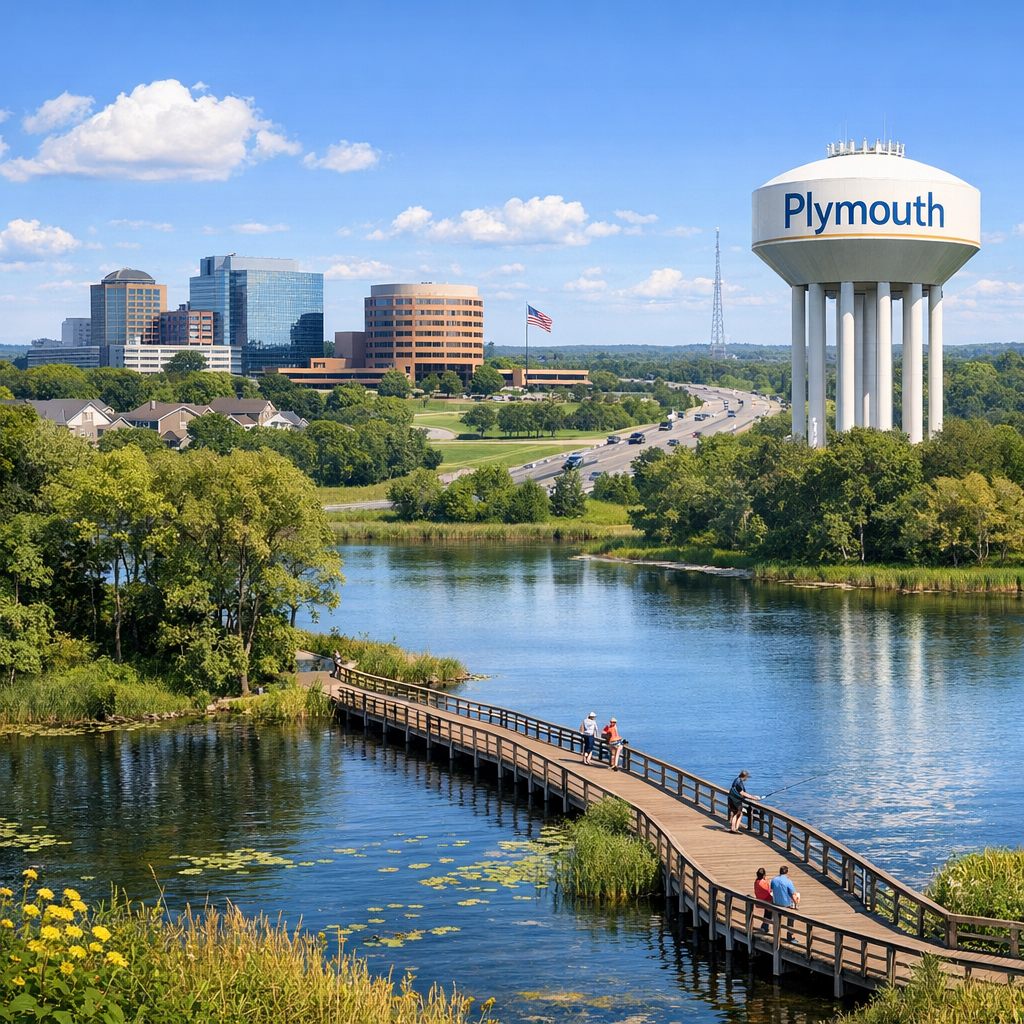
Plymouth, Minnesota, experiences a humid continental climate, characterized by significant seasonal variations. Residents encounter warm, wet summers and cold, snowy winters, with temperatures ranging from an average high of 82°F (28°C) in July to lows around 9°F (-13°C) in January. Precipitation is fairly evenly distributed throughout the year, with June typically being the wettest month.
Seasonal Weather Patterns
Summers in Plymouth are warm and humid, with average high temperatures in the low 80s°F (27-28°C). Winters are cold and snowy, with average highs in the low 20s°F (-5°C) and lows around 9°F (-13°C). Spring and fall serve as transitional periods, offering milder temperatures and varying precipitation levels.
Environmental Initiatives
The City of Plymouth is actively engaged in environmental stewardship. In 2024, Plymouth achieved Step 2 in the GreenStep Cities program, reflecting its commitment to sustainable practices. Notable efforts include the installation of solar panels on city facilities, such as Fire Stations 2 and 3, to generate renewable energy and reduce utility costs.
Additionally, the city is developing a Climate Action and Resiliency Plan, focusing on advancing equity, mitigating climate change, and increasing community resilience. This plan encompasses areas like transportation, land use, buildings and energy, waste management, and water resources.
Residents interested in contributing to these efforts can participate in programs like the Plymouth Environmental Academy, which offers education on reducing environmental footprints and promotes community involvement in sustainability initiatives.
Understanding Plymouth’s climate and supporting local environmental initiatives are essential steps toward fostering a sustainable and resilient community.